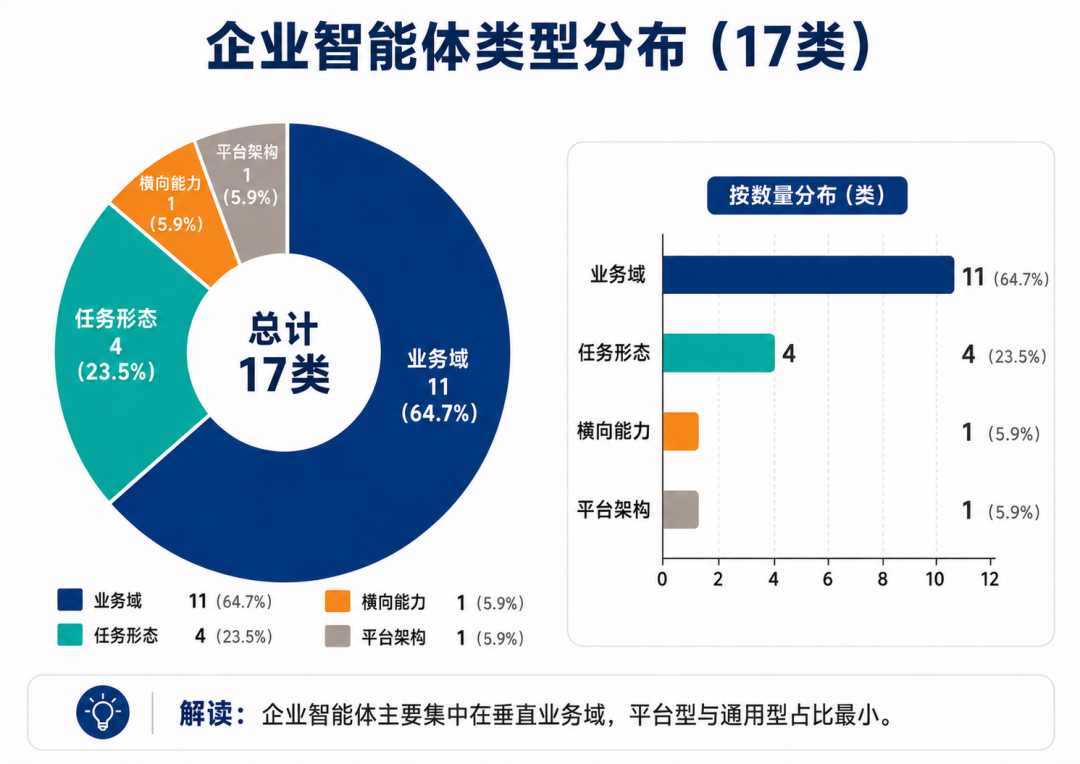
There are many types of enterprise agents. When implemented in specific business scenarios, the complexity, data requirements, risk boundaries and implementation difficulty of different agents may vary greatly.
From meeting minutes, knowledge search, document extraction, to customer service, sales, finance, legal affairs, security, industrial operation and maintenance, and medical documents, agents can be introduced in almost every enterprise scenario. However, the implementation requirements for different scenarios are different.
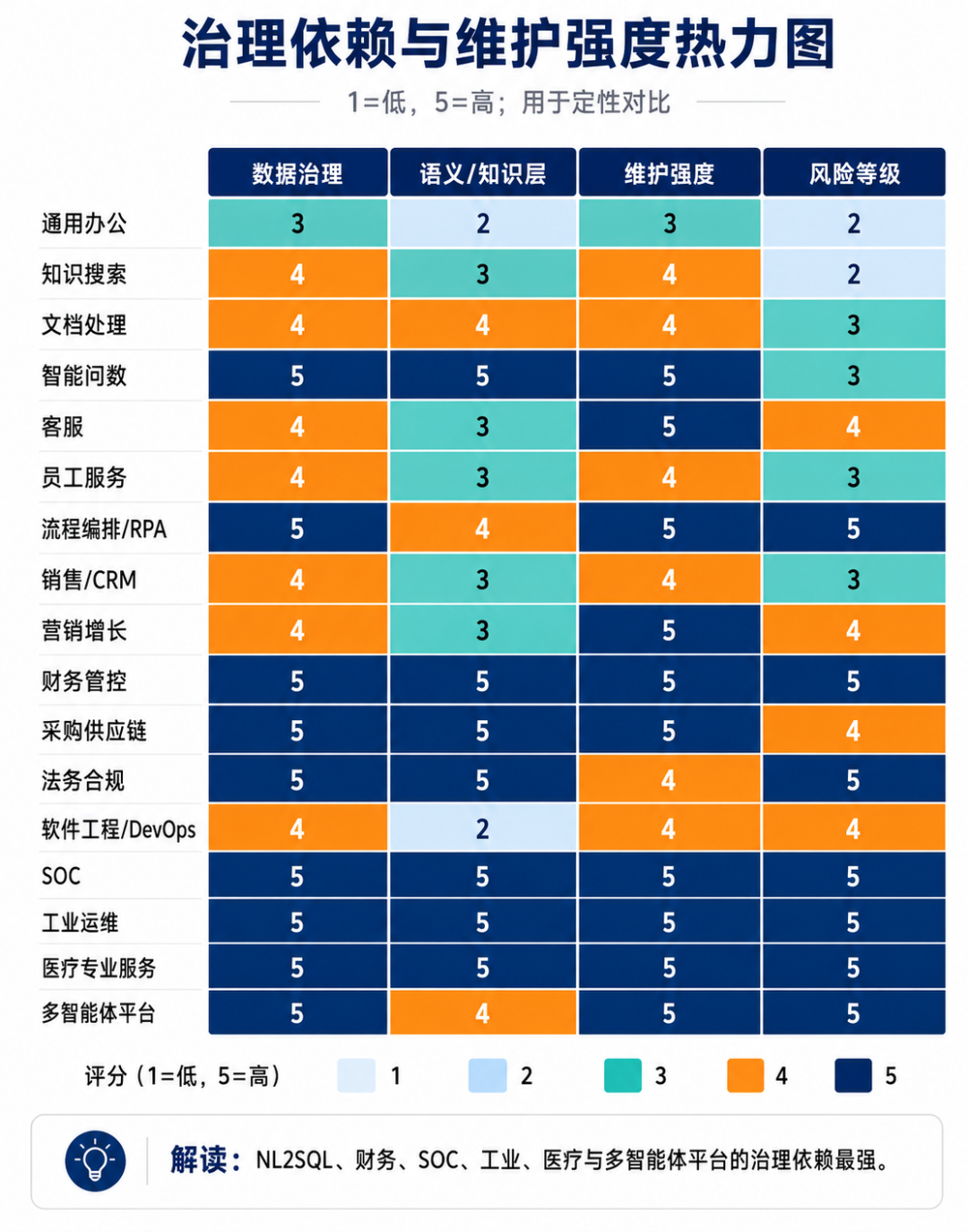
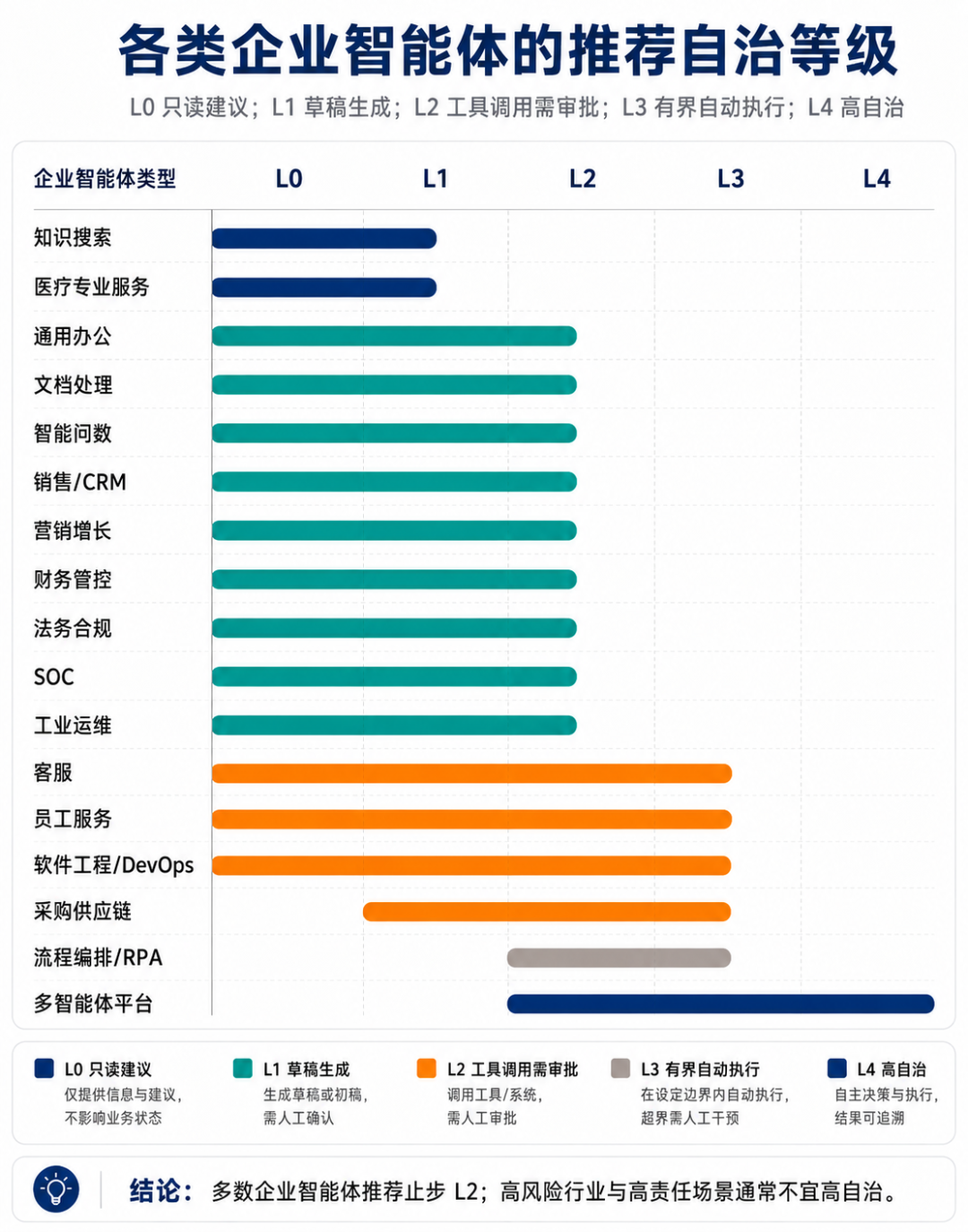
Some agents mainly test the understanding, generation and reasoning capabilities of the model, such as meeting minutes, document summaries, and customer service phrase generation; some agents are difficult in data governance, such as Ask-Data agents, financial/operation management and control agents; the core challenge of some agents is not "whether they can answer", but permission boundaries and action control, such as process orchestration / RPA / Transaction execution agents; some agents can be modified even if they make mistakes, such as email drafts and marketing copy generation; some agents will cause real business losses once they are executed incorrectly, such as customer service errors in refunds and SOC errors in banning accounts.
To judge whether an enterprise agent is worth doing, we should not only look at the technical feasibility, but also the business frequency, action risks, customer prerequisites, ROI demonstrability and long-term maintenance costs.
This article breaks down the enterprise agent to see how different types of agents differ in difficulty of implementation. It is used for Party A to evaluate priority scenarios, and for Party B (especially small teams) to judge product direction, delivery complexity, and ROI proof path.
| type | nature | Typical scenario | Core features | Customer preconditions | Data Governance & Semantic/Knowledge Layer Dependencies | Read/Write/Action Boundaries | Risk & Suitability Level of Autonomy | Maintenance intensity/maturity | Value cap/ROI/Difficulty of productization | Recommended entry methods for small teams |
|---|---|---|---|---|---|---|---|---|---|---|
| 1. General office assistant | Transversal capabilities/personal productivity | Email summary, meeting minutes, document generation, schedule assistance, personal knowledge management | It has wide coverage and high frequency of use, but it relies heavily on the office suite ecosystem and is easily absorbed by the built-in capabilities of major manufacturers. | Already have an office suite, and the boundaries of account, document, calendar, and email permissions are clearer | Data governance medium to high: document permissions, account permissions, privacy boundaries; semantic layer low to medium: corporate terminology and organizational structure are helpful but not core | Mainly focus on reading documents, reading emails, generating drafts, and creating to-dos; it is not suitable to directly send sensitive emails or modify key documents on behalf of users. | Action risk is low to medium; suitableL0–L2 | Maintenance intensity is medium; maturity is high | It has high personal value to users, but the ROI of independent products is average; it is very difficult to copy into products because big manufacturers have obvious advantages. | Not recommended to be an independent general office assistant. Vertical processes can be embedded, such as "Meeting minutes generate sales follow-up tasks" "Project meetings automatically generate Jira/Feishu tasks" |
| 2. Enterprise knowledge/search agent | Task form/horizontal basic ability | System Q&A, SOP query, expert search, product information retrieval, internal knowledge search | The core is trusted retrieval, permission awareness, citations, and version freshness, not just chatting. | It has a stable document source, can distinguish valid/expired knowledge, and has a content owner and permission system. | Data governance medium to high: permissions, confidentiality classification, version management, content ownership; semantic layer: glossary, knowledge classification, business tags, document life cycle | Primarily read-only; can generate answers, citations, recommended contacts, or documentation; does not directly modify the knowledge base unless there is a review process | Action risk is low to medium; suitableL0–L1, knowledge maintenance suggestions can be found at L2 | High maintenance intensity; high maturity | The upper limit of value is high; ROI is easier to prove in high-frequency scenarios such as customer service, compliance, SOP, and sales support; general internal search ROI is difficult to quantify | Suitable for vertical knowledge assistants, such as manufacturing SOP, compliance knowledge, bidding materials, customer service knowledge, product technical support knowledge base |
| 3. Document processing/extraction/review agent | Mission form/high value vertical capabilities | Contract review, invoice extraction, resume screening, claims material review, bidding document comparison | Document understanding + information extraction + rule verification + difference comparison + risk warning | The document type is relatively stable, with clear fields, templates, review rules or manual review processes. | High data governance: privacy, traces, evidence chain, version management; medium and high semantic layer: fields, terms, templates, document type ontology, business rules | Fields can be extracted, review opinions can be generated, risks can be marked, and review drafts can be generated; final approval, compensation rejection, employment, and contract signing should be reviewed by human reviewers. | Action risk is medium to high, depending on document type; suitableL0–L2, low-risk standardized extraction can be partially L3 | High maintenance intensity; high maturity | High value limit; high ROI provability; medium difficulty in value realization; medium difficulty in productization | Recommend priority entry. Start with "extraction + comparison + risk reminder + manual confirmation" to avoid promising automatic review or automatic decision-making at the beginning |
| 4. Ask-Data / BI / NL2SQL Agent | Task form/data analysis ability | Natural language query indicators, SQL generation, report interpretation, exception attribution, and business analysis | The surface is question and answer, but the essence is indicator caliber, semantic model, trusted SQL, permissions and data quality. | There is already a data warehouse, BI, and indicator system; the business owner and the data owner can cooperate; there is a clear indicator caliber | Data governance is very high: data quality, lineage, permissions, caliber consistency; semantic layer is very high: indicators, dimensions, Join, time caliber, business definition | Mainly read-only queries; can generate verified SQL, interpret reports, and generate analysis drafts; should not directly modify data or replace business decisions | Risk of misleading decisions is medium to high; suitableL0–L2, L3 is limited to certified indicators and fixed analysis processes | Maintenance intensity is high; maturity ranges from pilot to mature | The upper limit of value is high; ROI is medium to high when the data is mature; value realization is difficult; productization is difficult to extremely difficult | It is not recommended to do "just ask after receiving the library". It is recommended to do "minimum semantic layer + verified SQL + indicator card + query sandbox + traceability caliber" |
| 5. Customer Service/Contact Center Agent | Business domain/high-value and high-frequency scenarios | Pre-sales consultation, after-sales Q&A, refund and exchange, work order summary, manual transfer, customer emotion recognition | High frequency, clear value, can gradually move from auxiliary question and answer to bounded execution | There is a customer service knowledge base, order/work order system, clear service policies and manual transfer mechanism. | Data governance medium to high: customer data, order permissions, service records, compliance traces; semantic layer: product classification, policy rules, service processes | Can answer questions, summarize work orders, recommend techniques, and create work orders; actions such as small refunds, address changes, and reissues are subject to quota and rule restrictions | Action Risk Medium to High; SuitableL0–L3, high customer service, financial, medical, legal customer service should be downgraded | Maintenance intensity is very high; auxiliary type is mature, high autonomy still requires caution | The upper limit of value is very high; ROI is high to very high; value realization is medium difficult; productization is medium difficult | Recommended for vertical customer service. First do "knowledge questions and answers + work order summary + transfer to manual work", and then do small, regular, and rollable actions |
| 6. Employee Service/HR/ITSM Agent | Business Domain/Internal Service Desk | HR policy Q&A, IT failure reporting, permission application, entry and exit process, administrative services | Internal high-frequency repetitive services, action boundaries are more controllable than external customer service, but HR and ITSM risks are different | There is an HR/IT work order system, complete policy documents, clear organizational permissions, and an approval process. | Data governance medium and high: employee PII, organizational permissions, approval permissions; semantic layer: organizational structure, policy directory, service classification | Can answer questions, assign work orders, generate applications, and check status; authorization activation, salary performance, and labor relations actions require strong approval | The action is risky; suitableL0–L3. ITSM can be more proactive, and HR sensitive matters should be biased towards L0–L2 | High maintenance intensity; high maturity | High value limit; high ROI; medium difficulty in value realization; medium difficulty in productization | Recommended entry. It is suitable to be an "employee service desk agent", starting from Q&A, automatic assignment of work orders, and pre-filling of application materials. |
| 7. Process Orchestration/RPA/Transaction Execution Agent | Task form/execution layer capabilities | Approval transfer, cross-system form filling, exception handling, automatic order creation, status synchronization | The core is not to answer, but to complete tasks across systems; the value of LLM lies in unstructured input, abnormal branches and intent understanding | It has stable processes, stable system interfaces, and process owners, and can define action boundaries, approval conditions, and rollback mechanisms. | High data governance: system permissions, auditing, idempotence, rollback, logs; medium and high semantic layer: process status, business objects, exception rules | Can be used as an action gateway to create records, synchronize status, and trigger approval; high-value or irreversible actions must be reviewed by humans | Action high risk; suitableL2–L3, extremely cautious L4 | Maintenance intensity is very high; traditional RPA has matured, and LLM Agent process orchestration has evolved from pilot to mature | The upper limit of value is very high; ROI is high but pre-launch costs are high; value realization is difficult; productization is difficult | It is not recommended to do full-process autonomy first. It is recommended to do "action gateway + approval gateway + human review execution + abnormal transfer to manual" |
| 8. Sales/CRM Agent | Business domain/income related scenarios | Customer summary, business opportunity follow-up, meeting minutes, email drafts, sales next step suggestions, CRM auto-complete | Directly connected to revenue, but heavily influenced by CRM data quality, sales execution habits, and organizational processes | The use of CRM is relatively standardized, the sales stages are clearly defined, and there is a sales process and customer authority system. | Data governance medium to high: CRM integrity, customer permissions, activity records, compliance compliance; semantic layer medium: sales stages, customer stratification, product terminology | Can generate follow-up drafts, complete CRM, and prompt business opportunities and risks; it is not suitable to automatically reach customers at high frequency or automatically promise prices/terms. | The action is risky; suitableL0–L2, internal CRM completion can be partial L3 | Maintenance intensity is medium to high; maturity ranges from pilot to mature | The upper limit of value is very high; the ROI is medium to high but attribution is difficult; the difficulty of value realization is medium to high; the difficulty of productization is medium to high | Can provide light assistance, such as "meeting minutes to CRM", "business opportunity risk reminder" and "customer follow-up draft". Don’t promise to automatically increase sales |
| 9. Marketing/Growth Agent | Business domain/content and growth scenarios | Content generation, product copywriting, advertising materials, audience segmentation, event planning, private domain operations, and lead cultivation | Directly connected to revenue, high value cap; but complex attribution, brand consistency, channel effectiveness and compliance | There are product/user data, brand specifications, review processes, and contact consent records. | Data governance medium to high: user consent, customer data, channel compliance; semantic layer: product classification, brand tone, activity taxonomy, crowd tags | Can generate content, materials, words, and activity plans; automatic placement, automatic grouping, and automatic reaching require review and frequency control | Action Risk Medium to High; SuitableL0–L2, automatically reach and place cautious L3 | Maintenance intensity is very high; content assistance is mature, and automatic growth decision-making is still a pilot project | The upper limit of value is very high; content ROI is high, growth decision-making ROI is medium and attribution is difficult; productization difficulty is medium to high | Recommended narrow scene: E-commerce product copywriting, advertising material generation, private domain speaking skills, and brand consistency review. Be cautious about growing automation |
| 10. Finance/operation management and control agent | Business domain/high audit scenario | Reconciliation, collection, expense review, monthly statement, budget variance analysis, explanation of operating indicators | High value, high audit requirements; suitable for suggestions, explanations, drafts, not suitable for early automatic posting or automatic payment | ERP and financial processes are relatively standardized, with clear accounts, master data, approval rules and audit requirements. | Data governance is very high: accounts, permissions, master data, auditing, compliance; semantic layer is very high: account rules, indicator caliber, expense type, organizational caliber | Can provide exception explanations, voucher drafts, expense risk reminders, and collection suggestions; does not directly write accounts, make payments, close accounts, or issue formal statements | Action risk is high to very high; suitableL0–L2, extremely cautious L3 | Maintenance intensity is high; maturity ranges from pilot to mature | The upper limit of value is very high; ROI is high; value realization is difficult; productization is difficult | Start with "reconciliation explanation, abnormal positioning, voucher draft, collection suggestions, and budget variance explanation" without directly writing accounts or making payments. |
| 11. Procurement/supply chain intelligence | Business domain/complex entity relationship scenario | Supplier screening, quotation inquiry, tail purchasing, inventory abnormality, plan adjustment, delivery risk warning | Involving SKU, suppliers, contracts, inventory, BOM, price and delivery relationships, high complexity | The master data is good, including procurement strategy, supply chain system, contract/price system and approval process | High data governance: master data, price, contract, authority, compliance; high semantic layer: category, SKU, BOM, contract, inventory relationship | It can generate inquiries, supplier comparisons, risk reminders, and replenishment suggestions; be careful with automatic awarding, automatic order placement, and automatic plan adjustment. | Action high risk; suitableL1–L3, high amounts and key materials should be retained for review | Maintenance intensity is high; maturity level is mostly pilot | The upper limit of value is very high; the ROI of narrow scenarios is high, and the overall value realization is difficult; productization is difficult | Unless there are industry resources, it is not recommended to do it early. You can start from "Tail Procurement Assistant", "Supplier Information Review" and "Quotation Comparison" |
| 12. Legal/Risk Control/Compliance Intelligence | Business domain/High responsibility knowledge work | Contract review, regulatory research, obligation extraction, control mapping, audit evidence package | It must be quotable, traceable, and reviewable; it cannot just give conclusions. | There is a contract/compliance document library, professional review, and audit or compliance processes. | Data governance is very high: legal privileges, evidence preservation, permissions, traces; semantic layer is high: terms, obligations, controls, regulatory classifications, ontology | Can be used for clause comparison, risk warning, obligation list, and evidence package compilation; it should not replace the final legal judgment or compliance signature | Action high risk; suitableL0–L2, process evidence can be compiled with caution L3 | High maintenance intensity; contract/research type mature, execution type pilot | Value ceiling is high to very high; ROI is medium to high; value realization is difficult; productization difficulty is medium to high | It is recommended to do “review assistance, clause comparison, obligation extraction, and evidence package compilation”. Avoid making final legal judgments |
| 13. Software Engineering/DevOps Agents | Business Domain/Engineering Productivity | Code generation, PR Review, test generation, Issue triage, CI/CD assistance, fault location | Code context + tool chain + test feedback, there is a natural verification mechanism, but permissions and security risks cannot be ignored | There are code warehouses, test systems, CI/CD, engineering specifications, permissions and key management | Data governance medium to high: code permissions, IP, dependent licenses, key protection; semantic layer low to medium: code structure, architectural constraints, project specifications | Code, testing, PR, and repair suggestions can be generated; automatic merging, automatic deployment, and production changes must be strictly limited | Action Risk Medium to High; SuitableL0–L3 | Maintenance intensity is medium to high; maturity is high, close to industry standards | The upper limit of value is very high; the ROI is high; the difficulty of value realization is medium; the difficulty of copying general products is very high, and the vertical scenario is medium | It is not recommended to do general coding copilot. Can be used for "legacy system migration", "test generation", "SRE troubleshooting assistant" and "enterprise internal code specification assistant" |
| 14. Security Operations/SOC Agent | Business Domain/High-Risk Real-Time Operations | Alarm triage, threat investigation, log analysis, disposal suggestions, automatic response | Large volume of logs, many false positives, and high response time requirements, but the risk of false seals, missed negatives, and mishandling is high | Have a secure data platform, SIEM/SOAR, SOC processes, asset inventory and response plans | Data governance is very high: security logs, identity permissions, response permissions, auditing; semantic layer is high: asset graphs, attack chains, control mapping, risk classification | Alarm summaries, correlation analysis, investigation paths, and disposal suggestions can be made; account bans, host isolation, and traffic blocking require approval or strict rules. | Action risk is high to very high; suitableL0–L2, extremely cautious L3 | Maintenance intensity is very high; alarm summary/investigation assistance is mature, and automatic processing is still being piloted with caution | The upper limit of value is very high; ROI is high; value realization is difficult; productization is difficult | High threshold and high value. Small teams need security industry resources, and can start from "Alarm Summary + Investigation Path Suggestion + Human Review and Disposal Script" |
| 15. Industrial/Asset Operation and Maintenance Agent | Business domain/OT + IT scenario | Equipment diagnosis, predictive maintenance, maintenance suggestions, work order generation, spare parts planning, inspection assistance | Requires OT/IT, time series data, equipment knowledge, asset ledger and SOP, strong on-site constraints | Involved with equipment data, asset ledger, maintenance process, SOP and industry experts | Data governance is very high: equipment data, security isolation, permissions, data quality; semantic layer is very high: asset level, BOM, process, failure mode | Can generate diagnostic recommendations, repair plans, work order drafts, spare parts recommendations; should not directly control equipment or change production parameters | The risk of action is high to extremely high, which may affect production safety; suitableL0–L2, extremely cautious L3 | Maintenance intensity is high; maturity is mostly pilot | The upper limit of value is very high; the ROI is medium to high; the difficulty of realizing value is high to extremely high; the difficulty of productization is high to extremely high | Suitable for deep cultivation in a single industry. Start with "Maintenance Knowledge Assistant + Work Order Draft + Failure Cause Recommendations + Spare Parts Recommendations" |
| 16. Medical/High Responsibility Professional Service Agent | Business domain/High responsibility professional scenario | Medical record abstracts, clinical documents, discharge summaries, claims materials, patient follow-up, and operational quality control | High value and high responsibility require human review, traces, and authority control; medical treatment should be treated separately from ordinary professional services. | Medical data permissions are compliant, doctors/quality control personnel are involved, and usage boundaries are clear | Data governance is very high: privacy, patient safety, traces, access control; semantic layer is very high: medical terminology, diagnosis and treatment procedures, guidelines, ontology | Can do non-diagnostic documents, abstracts, material compilation, and operational quality control; no automatic diagnosis, automatic treatment recommendations, or automatic clinical decision-making | Extremely high risk; suitableL0–L1, some low-risk administrative/clerical processes can be L2, use with caution L3 | The maintenance intensity is very high; the documentation category is mature and the clinical action category is pilot | The upper limit of value is very high; clerical type ROI is high, clinical action type ROI is low to medium and the liability risk is high; value realization is very difficult | Can produce "non-diagnostic documents, summaries, claims, operational quality control, and follow-up drafts." Don’t make automated clinical decisions |
| 17. Multi-agent control tower/platform-based intelligence | Platform architecture/governance layer capabilities | Supervisor schedules multiple dedicated agents to unify routing, permissions, observation, and evaluation | It is not a single business scenario, but a platform architecture; the value comes from the unified governance of multiple mature sub-scenarios | There are multiple mature sub-scenarios with unified platform requirements and a basis for permissions, auditing, evaluation and observability. | Data governance is very high: permissions and data access risks will be amplified; semantic layer is medium and high: shared objects, roles, action contracts, context protocols | Can perform task routing, permission control, tool invocation, and evaluation monitoring; it should not be automatically executed across businesses without governance | Action risks are high, faulty links are more complex, and responsibilities are unclear; suitable forL2–L4, but strong governance is required | High maintenance intensity; early pilot for maturity | The upper limit of value is high, but it depends on the number of sub-scenarios; the early ROI is low, and the middle and late ROI is high; productization is extremely difficult | Not recommended as a first product. After there are 2-3 mature vertical agents, abstract the platform capabilities |